


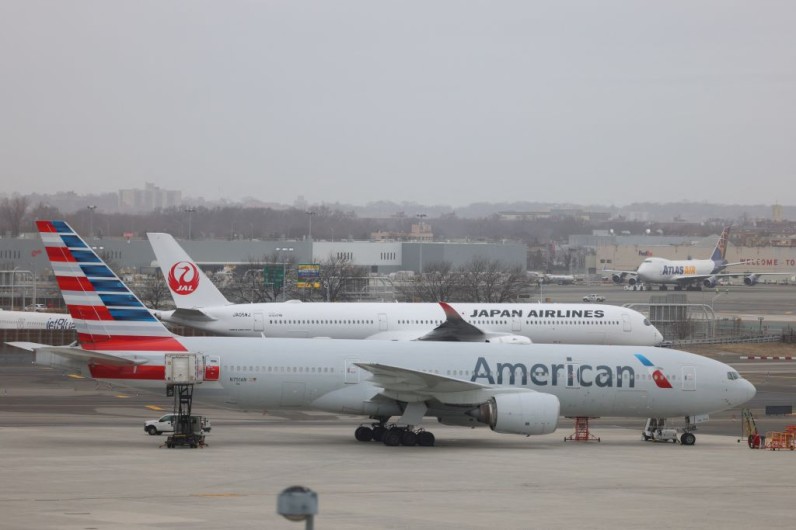
Talk of a major shake-up in the US airline industry is gaining attention after Scott Kirby, chief executive of United Airlines, raised the idea of a possible partnership or merger with rival American Airlines.
The proposal, reportedly shared during a meeting with former President Donald Trump, signals a bold vision that could reshape air travel in the country.
Kirby has long argued that the US market can support only two strong global airlines. He recently repeated that belief, saying, "There's only room in the country for two successful premium airlines."
His latest move brings that idea beyond industry discussions and into the political spotlight.
It is not yet clear if United has formally approached American Airlines about a deal. Both companies declined to comment, and sources say the idea may still be in early stages.
Even so, the possibility has sparked debate among industry experts and investors.
The rivalry between United and American is not new. The tension dates back to 2013, when American merged with US Airways, Reuters reported.
Kirby, who once worked at American, later joined United and has since competed directly with American for dominance, especially at Chicago's O'Hare airport.
That competition has often played out publicly, including recent remarks from American CEO Robert Isom, who called United's expansion "reckless." Kirby brushed it off, saying he "took that as a compliment."
United Airlines CEO Scott Kirby pitched a merger with American Airlines to US President Donald Trump, arguing a combined carrier would better compete against foreign airlines dominating international routes https://t.co/yDUJqIORvc pic.twitter.com/tU82Wap1Kx
— Reuters (@Reuters) April 14, 2026
Airline Merger Plan Raises Competition
According to US News, experts say a merger between the two airlines would be complicated. Combining two of the largest carriers would raise concerns from regulators, especially in cities where both companies already operate major hubs.
These overlapping routes could lead to demands for selling off assets before any deal is approved.
Financial factors also add uncertainty. American Airlines has struggled compared to some rivals, though it still reported over $10 billion in available cash and lower debt levels in recent months. "No matter how long this takes, American is built for times like this," Isom said.
For United, the risks are also clear. The airline is working toward improving its financial standing, but taking on American's large debt could slow that progress.
Together, the companies would carry tens of billions in liabilities, making the merger harder to manage.
Rising fuel prices add another layer of pressure. Industry analysts warn that higher costs could hurt profits and make large deals more difficult.
One expert described the idea of merging the two airlines as "like digesting a whale," pointing to the scale and challenge of such a move.


Join the Conversation