


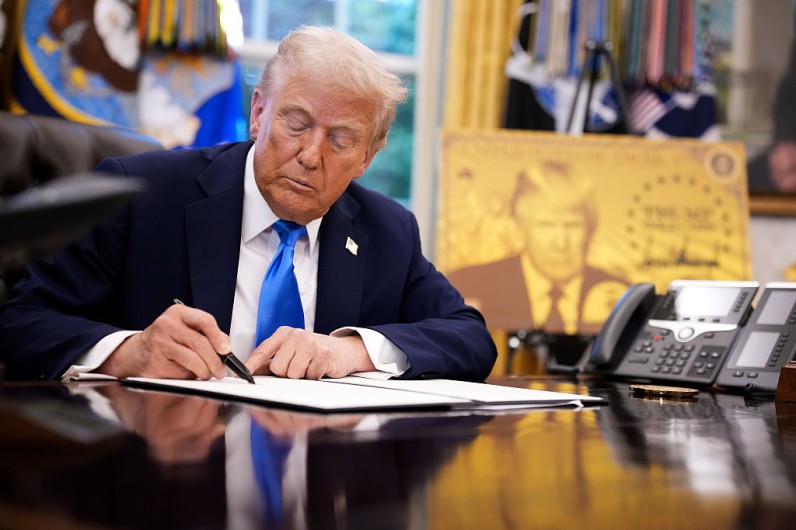
A federal judge in Massachusetts has blocked President Donald Trump's $100,000 application fee on new H-1B visas, ruling that the administration lacked constitutional authority to impose what he called an unlawful tax on employers seeking highly skilled foreign workers.
The H-1B is a temporary work visa that allows U.S. employers to hire foreign professionals in specialty occupations such as engineering, information technology, medicine, and university teaching, according to U.S. government descriptions of the program and long-standing immigration guidance.
It is typically valid for three years and can be extended to a maximum of six years in most cases, and many employers use it as a key pathway to fill roles that require advanced education or specialized skills, according to CNN.
U.S. District Judge Leo Sorokin issued a detailed decision in Boston on Monday, striking down the fee that Trump introduced by executive order in September of last year, according to press reports on the ruling by outlets such as Reuters, The Guardian, and other national publications.
Sorokin held that the charge violated the Administrative Procedure Act and the Constitution because it functioned as a tax that only Congress may authorize, those reports said.
He wrote that the structure and purpose of the $100,000 payment showed it was a tax in substance, regardless of the label used by the administration, according to summaries of the opinion.
The ruling came in a lawsuit brought by a coalition of Democratic-led states that argued Trump exceeded his powers under the Immigration and Nationality Act by imposing a fee far above the cost of administering the H-1B program, as described in coverage of the case.
The complaint said immigration agencies are permitted to collect only the amounts necessary to run visa operations and that the new fee would force universities, hospitals, and technology firms to scale back hiring.
Plaintiffs also warned that the policy would undermine sectors like healthcare and higher education that rely heavily on H-1B professionals, according to court filings summarized in legal and news analyses, Politico reported.
Before Sorokin's decision, other federal judges had reached different conclusions about Trump's authority to require the six-figure payment, with at least one earlier ruling upholding the fee under the Immigration and Nationality Act's broad language, according to prior federal court coverage.
That earlier decision is already on an expedited appeal at a federal circuit court, underscoring the nationwide stakes of the fee dispute.
Sorokin's order vacates the $100,000 charge nationwide and restores the prior H-1B fee structure that cost employers significantly less per application, based on immigration fee schedules cited in news reports.
Business and research groups that joined or supported the state challenges say the decision removes an immediate financial barrier to sponsoring engineers, nurses, and other specialized workers, according to statements reported by major outlets.
The Justice Department is expected to appeal, setting up a potential clash in the appellate courts that could eventually reach the Supreme Court if conflicting rulings persist, as per Ogle Tree.


Join the Conversation